Overclocked Arena is a 2D top-down survival action game inspired by Vampire Survivors, with a strong focus on system-driven gameplay, scalable enemy behavior, and player-controlled risk–reward mechanics.
The core concept revolves around Instability:
the more powerful the player becomes, the more dangerous the game world gets. Players must constantly balance short-term power gains with long-term survival.
This project is currently under active development and serves both as a playable prototype and a technical showcase of my game architecture, AI systems, and UI/UX design.
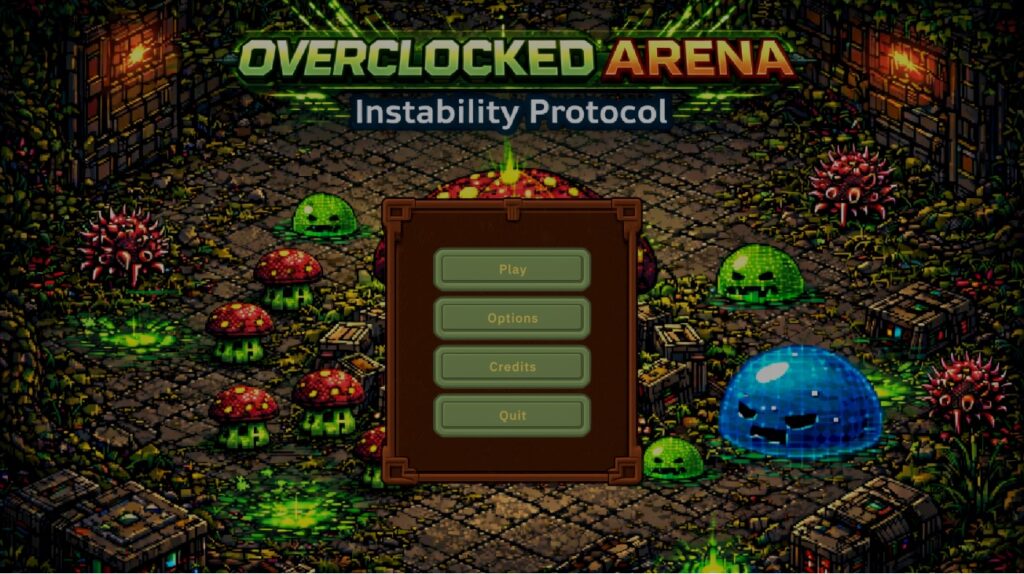
Core Gameplay Loop
- Defeat enemies to gain XP and level up
- Choose upgrades that improve weapons and player stats
- Increasing power raises global Instability
- Higher instability introduces stronger enemies, elites, and bosses
- Survive waves, defeat bosses, and manage escalating difficulty
Design goal: Make every upgrade choice meaningful, not always optimal.
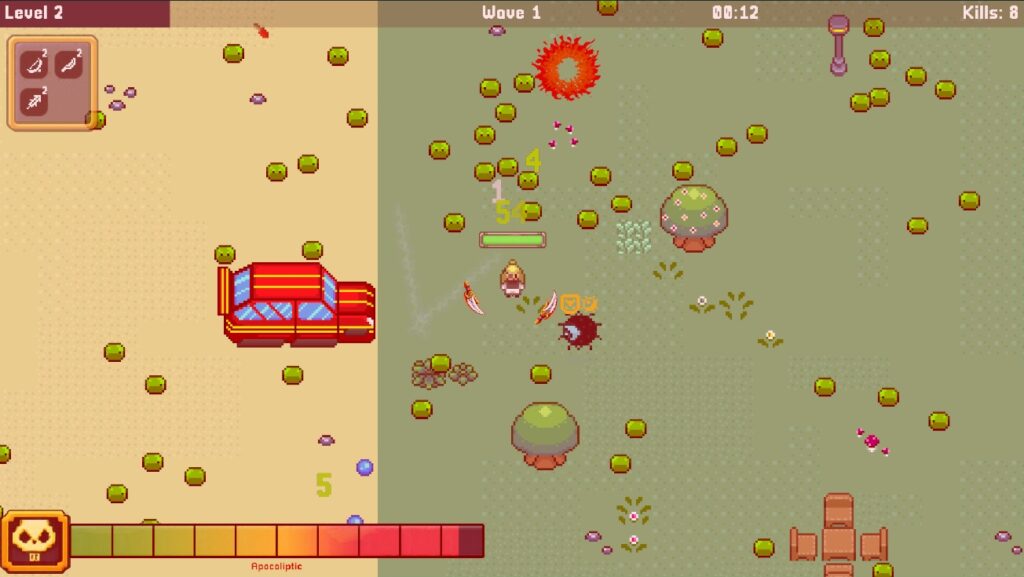
Player Progression System
XP, Levels & Upgrades
- Enemies drop XP orbs that can be collected or magnetized
- XP thresholds scale per level
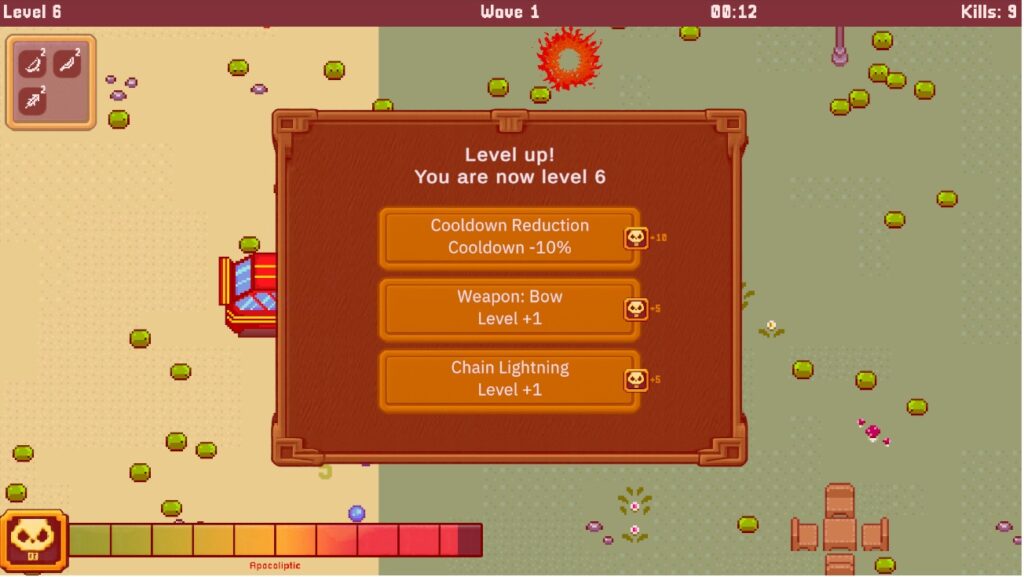
- Level-ups pause the game and present randomized upgrade choices
- Upgrade rarity is influenced by player “luck” and instability
Upgrades include:
- Global stat upgrades (damage, cooldown, max HP)
- Weapon upgrades (projectiles, chaining, special effects)
- Weapon evolution paths
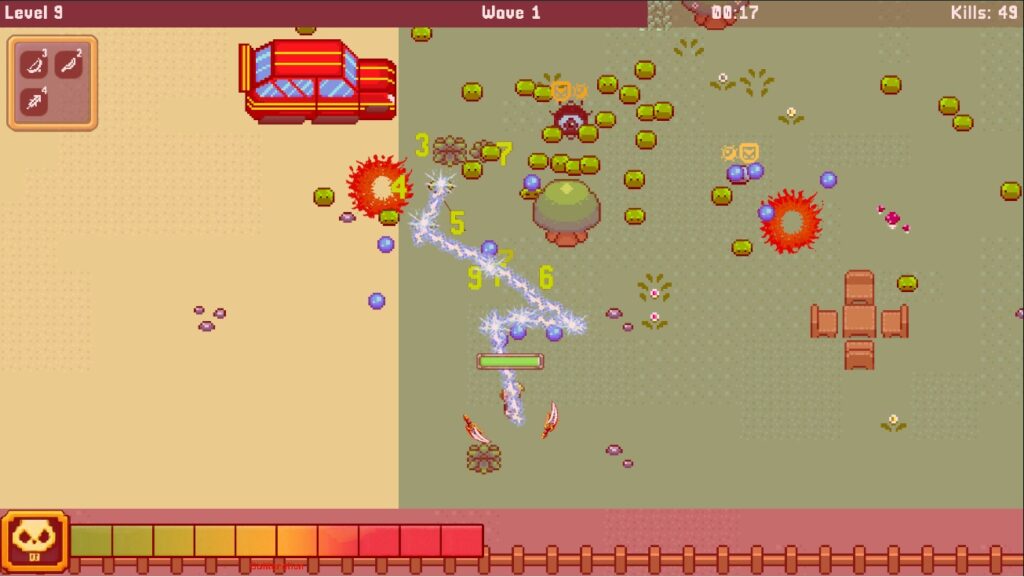
Weapon System
Weapons are modular and fully data-driven:
- Each weapon recalculates stats from player modifiers
- Supports evolution into more complex forms
- Behaviors are split into reusable components (shooting, chaining, AoE, etc.)
Example:
- Chain Lightning Weapon
- Jumps between enemies
- Damage falloff per jump
- Optional stun effect with per-enemy cooldown
- Evolution adds explosive effects on final hit
Enemy System & AI
Standard Enemies
- Spawned in weighted waves
- Multiple enemy types (melee, ranged, split-on-death)
- Grace periods to prevent unfair damage on spawn
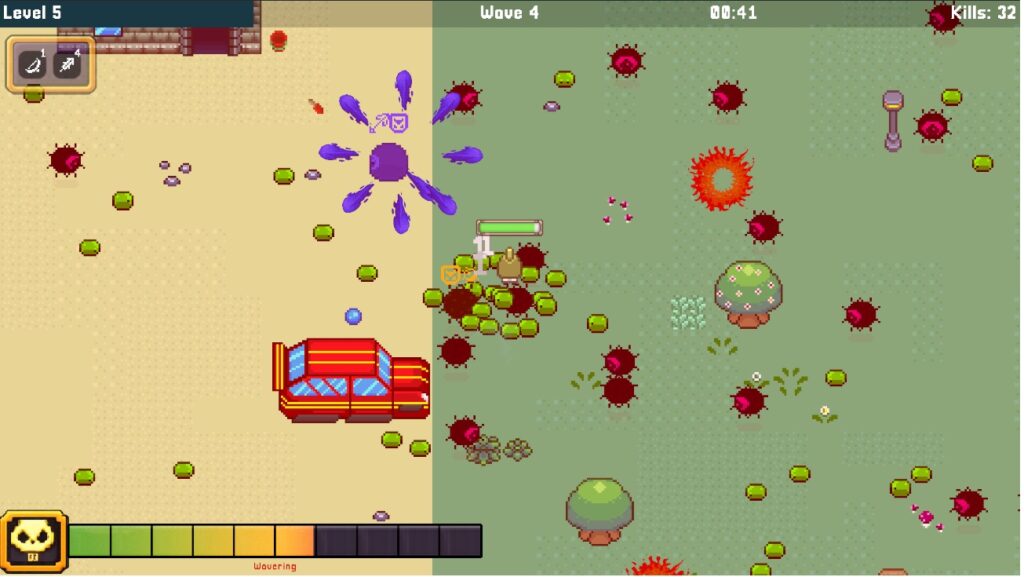
Elite Enemies
Elites introduce trait-based modifiers, such as:
- Projectile bursts
- Shield phases (armor or invulnerability)
- Speed modifiers
- Split behaviors
Traits are:
- Modular
- Reusable by bosses
- Visually indicated above enemies
Boss System
Bosses are phase-driven and reuse elite systems while adding unique behaviors.
Boss Architecture
BossAIControllerhandles phase transitions- Phase behavior is implemented via interfaces (scalable design)
- Supports multiple boss types without duplicating logic
Boss Types Implemented
- Summoner Boss
- Periodically summons minions
- Applies elite traits to itself
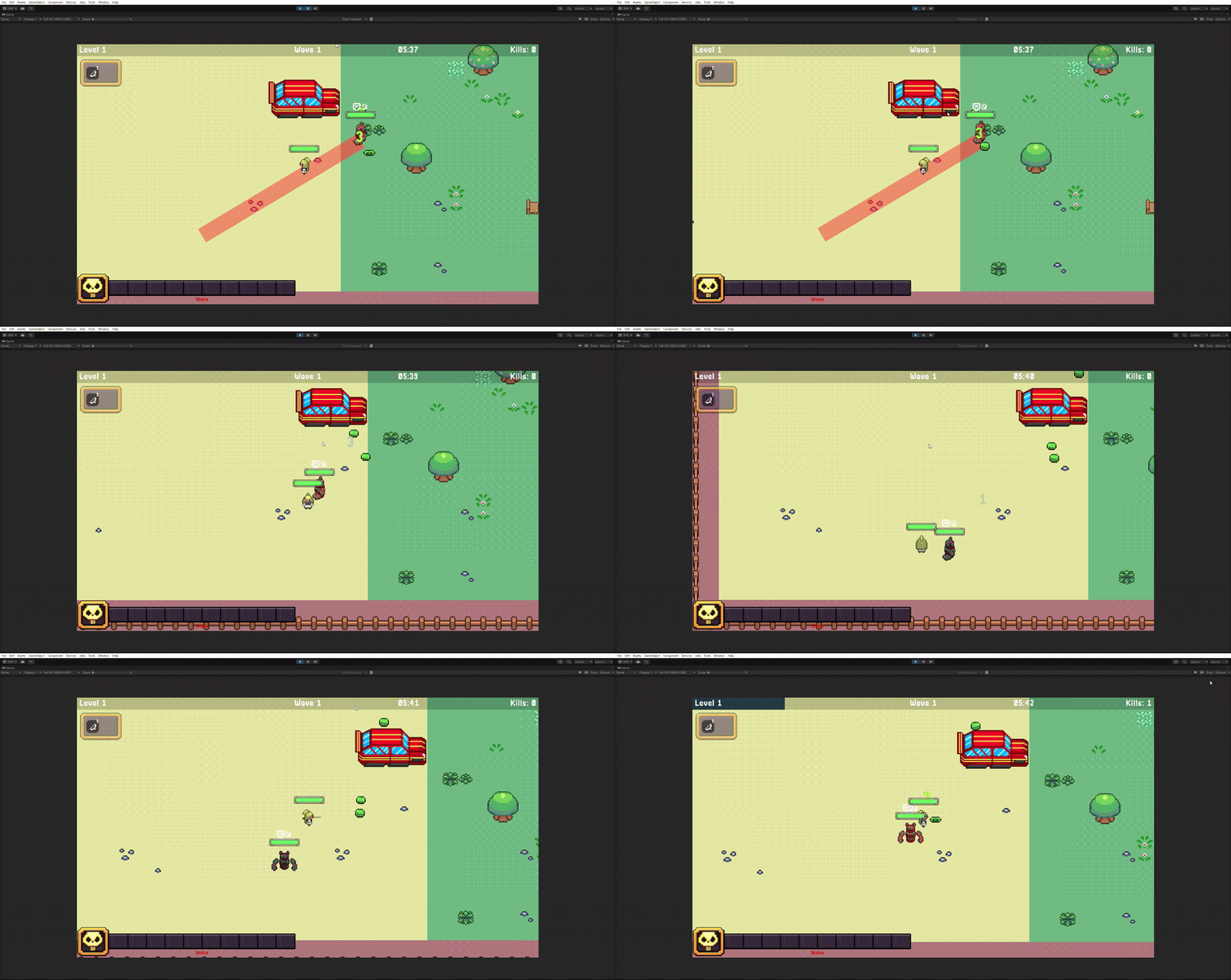
- Dash / Charger Boss
- Telegraphs attacks
- Locks target position
- Dashes a fixed distance based on speed & duration
Telegraph & Visual Feedback System
Enemy attacks use clear telegraphs to ensure fairness:
- Line renderers with animated materials
- Wind-up time before heavy attacks
- Color-coded danger indicators
This improves readability even at high enemy density.
Instability System (Core Mechanic)
Instability is a global difficulty modifier that:
- Increases enemy spawn rates
- Unlocks elite traits and bosses
- Triggers special events at defined thresholds
Ways instability changes:
- Increases via powerful upgrades
- Decreases by killing elites or bosses
- Can be affected by future pickups or interactables
UI & UX Systems
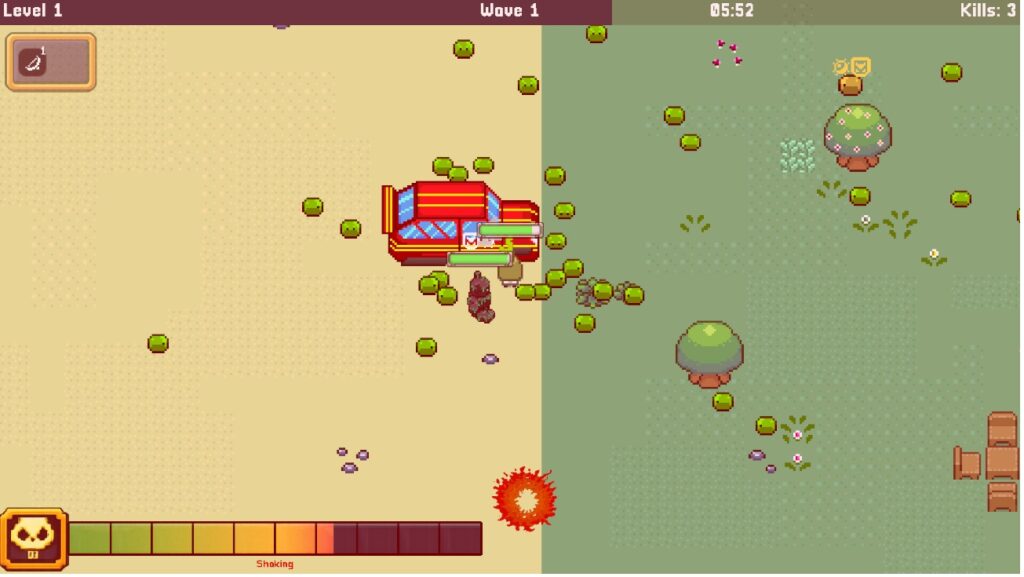
- Pixel-art inspired UI
- Pixel-perfect camera
- Dynamic HUD for HP, XP, instability, and time survived
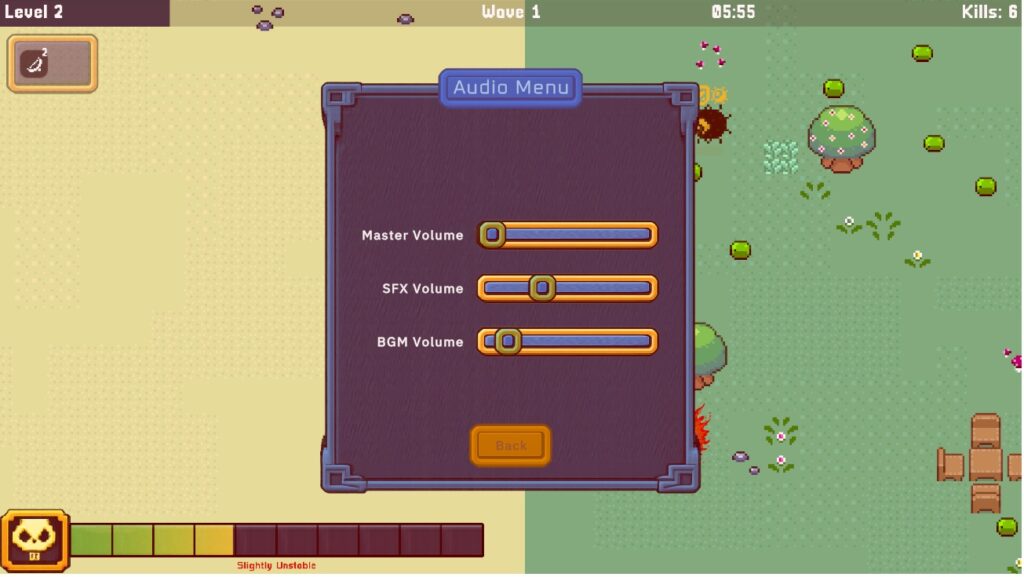
- Pause, settings, and game-over screens
- Upgrade rarity colors and visual feedback
Audio & Feedback
- Sound effects for:
- Weapon hits
- XP collection
- Boss attacks
- Level-ups
- Visual effects synchronized with audio for clarity
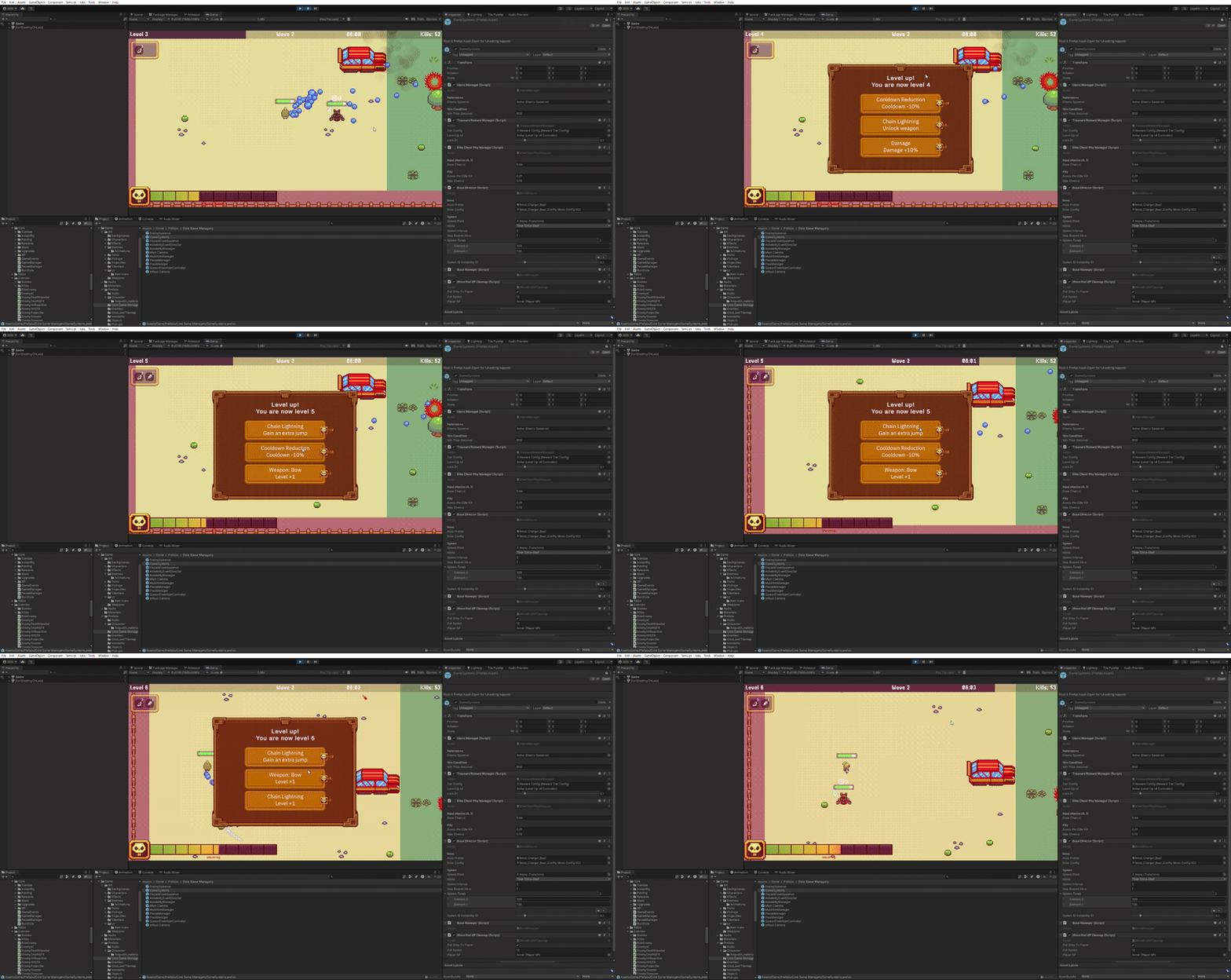
Technical Highlights
- Unity (C#)
- Component-based architecture
- ScriptableObject-driven data
- Object pooling for performance
- Event-based communication
- Clean separation between gameplay logic, UI, and effects
- Designed to scale toward multiplayer or additional game modes
Current Development Status
✔ Core gameplay loop
✔ Player progression & upgrades
✔ Elite & boss systems
✔ Instability mechanic
✔ Visual telegraphs & VFX
✔ Restart & run lifecycle handling
🔧 In progress / planned:
- Main menu & settings
- Meta-progression
- Additional bosses
- More instability events
- Accessibility & balance polish
Why This Project Matters
This project demonstrates my ability to:
- Design scalable gameplay systems
- Write maintainable, modular code
- Debug complex interactions (pooling, timing, state)
- Balance gameplay from both technical and player perspectives
It is actively evolving and serves as a foundation for further expansion.